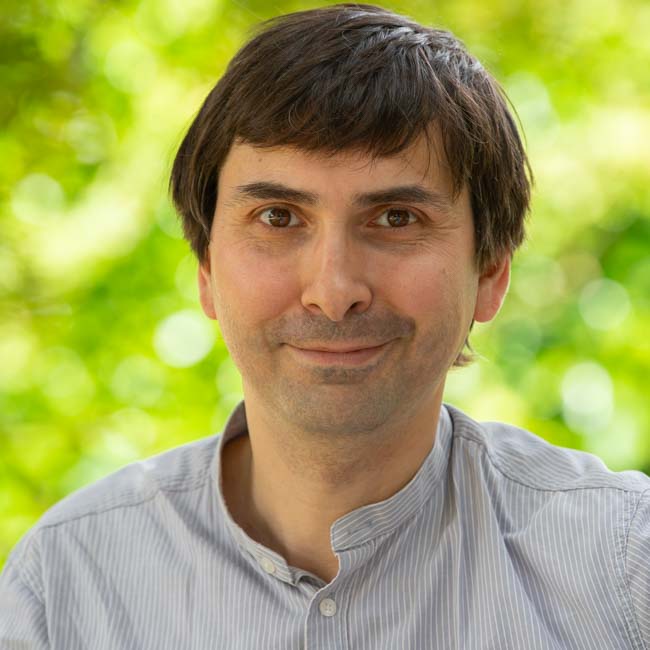
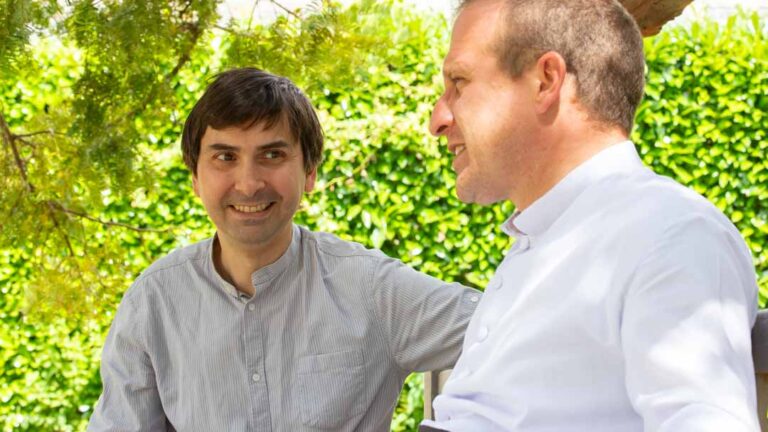
François-Xavier Maigre is a writer, journalist, and editor-in-chief. After fifteen years with the Bayard Group publishing company—notably at La Croix, Panorama, and Le Pèlerin—he now works in communications strategy consulting. He is also a poet, author of hiking narratives, and a musician, with a keen interest in the connections between Christianity, literature, and art. In Ce qui passe, ce qui demeure [What goes and what remains], published by Salvator in the fall of 2026, he recounts an inner and physical journey to the shrine at Montligeon, triggered by several personal trials. In this story of loss, sacrifice, and hope, the walk becomes a path to recovery.
Book signing sessions with the author
Wednesday, September 16, in Paris, from 7:45 p.m. to 9:30 p.m., at La Procure bookstore— 3 rue de Mézières—75006 Paris (free registration: laprocure@laprocure.com)
Friday, November 20, in Chartres, from 6:00 p.m. to 7:30 p.m., at L’Esperluète bookstore— 10 rue Noël Ballay—28000 Chartres
Walking to Montligeon after loosing a loved one
I am 44 years old. I have been a journalist for much of my life, notably with the Bayard Group. I worked at the daily newspaper La Croix, then served as editor-in-chief of *Panorama*, a monthly spirituality magazine, before becoming editor-in-chief at Le Pèlerin. After that, I decided to step away from journalism to explore another aspect of writing by joining a communications strategy consulting firm.
Today, I write on behalf of executives and entrepreneurs. It’s always about communication: putting ideas into words, conveying messages, and helping words find their right form. However, I’ve crossed over to the other side of the mirror, and I find this new way of engaging with my work deeply fascinating.
The walk to Montligeon began in the fall of 2022, just as I was leaving journalism behind. I had just turned 40. I was about to start a new career, and I felt the need to let that first chapter of my life settle before committing to something new. I spent three weeks in a house located a two-day walk from the shrine—a house that my wife, children, and I were in the process of renovating.
At that time I was just coming out of a peculiar situation. Three events had left a deep scar on me. The first one was the betrayal by a prominent spiritual figure to whom I had been very close—someone for whom I had written and to whom I had dedicated myself. That betrayal was hard to deal with—quite brutal, even. I felt betrayed, but also a bit foolish for having been blinded by this person’s aura. I asked myself: What’s the point of all this?
In the Church, aren’t we sometimes naive when we put people—who are, after all, only human—on a pedestal? This question has weighed on my mind. It made me question my profession and prompted me to take a step back from journalism. The second factor was a sort of midlife crisis. Everything was going well in my career, but I told myself that perhaps it was the right time to move on.
“Life is more like a path of downsizing.”
Grieving a woman friend
And last, the third event was the death of a coworker. She was a radiant person, and I liked her very much. She died very young, at age 32.
All of this happened all at once. As a result, I’ve thought a lot about the issue of grief. Grief is a common experience, in the sense that we all go through it at one time or another, with people we’re more or less close to: family members, friends, coworkers. Yet I felt as though it remained a taboo subject. It’s very rarely discussed. People try to “work through grief” as if they could put this experience behind them once and for all.
In reality, those events made me reflect on loss, whether physical or symbolical. We live in a world where everything is an incentive to growth. We want an increase in salary, we want to hoard, move forward, give our life the shape of an ascension. Now, in my fortieth year, I had the opposite feeling : life is rather a path for downsizing. We are called to get dispossesed of many things during our lives, in order to get prepared for the Great Encounter.
This realization was counterintuitive. Yet it kept nagging at me. I remembered that Montligeon was a two-day walk from our home. No one was waiting for me. I had plenty of time. So I set off.
It was the day after All Saints’ Day. Fall had already begun to shorten the days. Night was falling earlier and earlier. The sap was retreating into the trees, the leaves were falling, and even the landscape seemed to whisper to me of abandonment and dispossession. I spent two very peaceful days walking. I was alone, but I also met people along the way. When I arrived in Montligeon, I was welcomed in a warm, family-like manner.
I hadn’t announced my visit, and I hadn’t told anyone what I was doing. It was nice to arrive somewhat incognito. When you’ve been a Catholic journalist, you’re used to go from one shrine to another. This time, I was coming for a different reason: this pilgrimage was a real springboard for what came next.
Accepting reality without giving up hope
This journey was not an escape. On the contrary, it confronted me with reality: betrayal, grief, a midlife crisis, and the month of November—a time of nature’s decline before winter. Yet this journey was a journey of hope. In fact it was nothing but that. I realized that perhaps I had been living, up until then, in a kind of spiritual illusion. Sociologists have coined the term “adulescence”: nowadays, many adults never fully mature and remain in an adolescent mindset for a long time. We struggle to face reality. We seek comfort, we cling to illusions, and we tell ourselves that things won’t have serious consequences and that we’ll deal with them later.
That period helped me grow. When we accept that someone has lied to us, but that, yes, that person is a man—and men are imperfect. They are marked by sin. We must move past this together. Once we accept this reality, a path to forgiveness becomes possible. A path to growth, too.
As for grief, I explain in the book that I’d long been very spared. I’m fortunate to have my wife and children in good health, my aging parents, and my children’s grandmother, who will soon turn 100. But as I was moving through life, I’ve started to lose friends and colleagues. I feel like I’m reaching a point where my life is taking on a vertical dimension. I know people here on earth, but I also know people up there. Little by little, this forms a cross.
So, for me, there was an element of accepting life as it is in this walk. It wasn’t about fighting against reality, but about looking at it. Of course, if we stick only to reality, there are plenty of reasons to fall into a kind of discouragement, because reality can be harsh. Yet I’ve often met people who’ve gone through much harder times than I have and who possess an unshakable hope. They embrace things as they come, they manage their daily lives—even the little things—and they teach me a lesson. So I tell myself: don’t act like a spoiled child; you’re very lucky. Learn to embrace the light wherever it is.
The Christian life is a great school for learning to accept reality
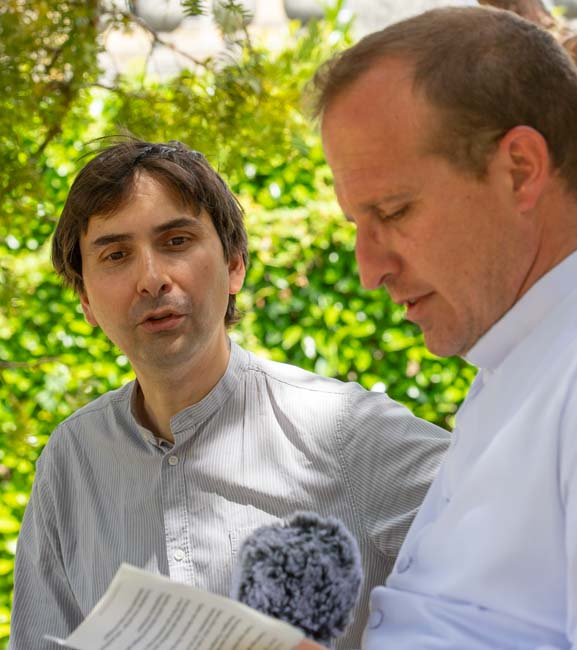
Furthermore, I find that the Christian life is a great school for learning to accept reality. To write this book, I started reading the scriptures again. I am neither an exegete nor a theologian; I read them through the lens of my own sensibilities as an ordinary believer. The Nativity means a great deal to me. This spirituality speaks to me deeply. In fact, from the very moment of Christ’s birth, death is already foreshadowed. The Massacre of the Innocents is to follow. We know that this story will not end like a gentle, uneventful fairy tale.
The entire Christian life points us toward this crossing. In the parable often called the Parable of the Prodigal Son, what strikes me is the father. For me, he is the true hero of the story. He says: “My child was lost, but has been found.” In Christian spirituality, we have tools that should teach us to accept reality as it is, without always running away or believing that we will always keep accumulating.
Yet it’s part of human nature: we want bigger houses, we want to protect our children, we want more money in our bank accounts. Even as Christians, we can’t escape this temptation. In the book, I even question the mantra of “spiritual growth.” We’re often told that we need to nurture our spiritual growth. But I’m not sure that it’s always growth. I’m particularly moved by a prayer from the Orthodox liturgy that addresses God as the ungraspable, the unpronounceable, the indecipherable.
In the Latin Church, we sometimes tend to make many assertions about God and the faith. Catechism has its place, of course. However, there is also an acceptance that we cannot name everything, that we cannot define everything. This spiritual restraint matters more and more to me.
Society pushes us to hoard, to grow, to achieve more. But, in the end, we will become children again. We will shrink. We’ll move on to something else. I believe we live out our faith more authentically when we step out of the illusion of perpetual growth and also accept that we may lose our certainties.
As a father, I experience this firsthand. When children are born, we sometimes have grand principles. We think we’re going to tell them strong things, raise them in a certain way, set certain boundaries for them, and send them to a specific school. Then the children grow up pretty much as they please. We discover that our principles don’t always work. So we have to let go of some of our certainties and work with the child as they are.
Life thus compels us to let go. My book is about that. Grief is one of its elements and one of its driving forces, but there is also the grieving of our certainties and illusions. In this letting go, I believe there is a very authentic path to happiness and hope.
Montligeon: an unsophisticated pilgrimage
My choice of Montligeon was, at first, a very pragmatic one. I wanted to go on an unsophisticated pilgrimage. Even a s part of the pilgrimage, I wanted to experience a sense of renunciation and loss. I didn’t want to do anything grandiose.
After graduating, I had cycled to Fatima. I made the trip there alone, and my future wife rode back with me. We were in our early thirties at the time. We also walked from Versailles to Mont-Saint-Michel with our children for five weeks. I’ve traveled extensively in the Holy Land for my reporting. This time I decided I was going to do something humble: step out of my front door, walk for two days—almost the opposite of a trip.
This exercise was valuable in and of itself. I was familiar with the history of Montligeon, and I realized that this shrine resonated with the questions I was grappling with. It’s not all that common, within the Church, to find a place that is at the crossroad all of these elements: mourning, the dead, hope, prayer, and communion. I came without knowing much about it, but with this intuition.
I’m pretty independent by nature. I knew there was a Fraternity and organized pilgrimages, but that wasn’t really my style. So I went on my own. On the evening of my arrival, a pilgrimage had just ended. It was, I believe, a Sunday evening. I found myself at the table with two African priests and with people of different generations, from different social backgrounds, and from different places. Some of them may have known each other; others did not.
What touched me the most was that I arrived after two days of walking—following some rather austere days at my house, which was being renovated—and I felt deeply at home. There we were, eating our meals in the cafeteria, as if we were twelve-year-olds at summer camp. I found that true prophetism lay right there: living in genuine brotherhood.
“The Church I love: the Church that enters into life, and life that enters into the Church.”
The next morning, we all gathered for the weekday Mass. This moving from one table to another struck me. It seemed powerful to me. Montligeon embodies a spirituality rooted in everyday life. People come with their baggage, their burdens, their questions. There is a sharing of daily life, and the liturgy fits naturally into it. “This is the Church I love: the Church that enters into life, and life that enters into the Church.”
The day this interview took place coincided with the motorcyclists’ pilgrimage. I thought it was really beautiful. There’s a great sense of openness between believers and everyday life. It’s not a world apart. This openness seems important to me, especially today. Parishes are spreading out, and parish mergers sometimes make it harder to practice one’s faith, even though the Paris region may still be somewhat better preserved. In this context, shrines can become spiritual oases. They allow people to recharge their batteries so they can live out their faith in daily life—at work, with their families, and in the midst of everyday life.
Sometimes we need a wake-up call to remind us where we’ve come from, where we’re going, and to re-anchor our spiritual life at the heart of our existence. Mont-Saint-Michel accompanied me on this walk, in a way. I carry it on my shoulder; it’s very much a part of me, and I’m very fond of the archangel in the parish church of Montligeon. When I arrived in Montligeon, I read the signs and discovered the figure of Father Buguet, whom I didn’t really know. His story touched me deeply.
What struck me about him was precisely this Church that I love: a Church that is both social and spiritual. Father Buguet saw a particular need. The residents had material needs, and he addressed them. But he also addressed the spiritual needs of his time. This balance might seem distant or outdated; it is not. We face the same challenge today: never to lose sight of these two dimensions.
Faith is beautiful when it does not deny either of those two pillars. Montligeon appeared to me as a place of coherence. I didn’t know the full history of the shrine. I later read more about it, particularly on the website. I found it remarkable that a place dedicated to praying for the souls in purgatory is not ethereal or fleeting, but very concrete. There used to be a printing business, as part of social welfare initiative—a response to a specific situation. Today, social issues have taken on a different form, but they remain. They relate, in particular, to welcoming people, supporting those who are grieving, and addressing loneliness.
What I perceive here is an unconditional welcome. People come with their stories, their background, their relationship with the Church, their wounds, their faults, or their faithfulness. They are not asked about their last confession. A door is opened for them: “You are at home here”. If you want to start over or begin something new, you’ve come to the right place.
At a time when the issue of an epidemic of loneliness is so often raised, demonstrating open brotherliness is already a form of social commitment in my view.
A faith that is more hushed up, more chaotic, and more authentic
My parents raised me in the Christian faith. Then, in middle school, I got kicked out of catechism class because I was a bit of a troublemaker. So there was a spiritual hiatus of a few years, lasting until I became an adult. I rediscovered my faith later on, and then I was confirmed at age thirty. I came back with the faith of a newcomer. I was uncompromising, very assertive, and 100% involved with the matter.
The further I go, the more I realize that my certainties are unraveling. I feel as though God is a presence that is absent. He allows Himself to be experienced, but in a very subtle way. And a true spiritual path lies in this probing exploration.
I really love the Gospel story of the pilgrims to Emmaus. They walk with Jesus. They are with him. Just as they recognize him, he slips away from their sight. This happens during a difficult time in their lives, when all their illusions have been shattered. This scene speaks to me deeply. Today, my faith may be more chaotic, more hushed up, but I think it has never been more authentic.
That’s why I don’t always feel very comfortable with a faith that’s too assertive, one that comes with grand principles. I believe things are always more complex than that. In the Gospels, Christ doesn’t offer simplistic answers. He often reminds people of their own responsibility, while at the same time enlightening them. As believers, we don’t have a magic potion that would give us the answer to everything.
We are constantly faced with our free will. And that takes a toll.
What should we do about anger?
From my level, when I took that trip, I was still very angry at this spiritual figure with whom I had once been close. What should I do with this anger? Do I choose to acknowledge what this person has given me as well? Do I try to forgive them? Nothing is ever completely simple. There’s no single answer.
We live in a world that demands immediate answers. The pilgrimage taught me something else. It is a journey, a continuum. There is no single moment when everything is suddenly resolved. It takes time. We move forward, sometimes we take a step back, and then we start again. This applies to grief, to betrayals, to disillusionment, but also to those moments when we disappoint ourselves.
This walk helped me gain a sense of kindness toward myself and others. It also taught me that there is life after life. Perhaps it’s what wisdom is about: accepting that we don’t control everything, acknowledging that we don’t know everything, and letting the years take their course. I never turn down a good joke; that’s why I found the idea of questioning “spiritual growth” amusing. But deep down, the question is a serious one. Growth isn’t always a good thing. We see this in many areas of life. Sometimes we need growth to live and be happy, but aimless growth can become exhausting—for our resources, for our minds, and for our inner lives.
What I’m discovering is the importance of accepting that I can’t control everything. Some things are beyond my control. As for what is within my control, I must take responsibility for it. We are always free in the face of grace. That’s what’s so beautiful about it: God always respects our free will. We’re never forced to go along with it. Even when we catch a glimpse of something, there comes a time when we have to want it, too. We have to let go. Over time, we learn little by little how to do that.
What remains when everything is gone
Through *Ce qui passe, ce qui demeure [What Passes, What Remains]*, I wanted to convey one simple idea: living with loss is possible. I’ve often met people who struggled to bounce back from a disappointment, whatever it might be: losing a job, being dumped, or experiencing a brutal death. Managing to live with that is not easy, but it is possible.
I even believe that as long as we lose, it means we’re alive. When we lose, there’s always something left. Sometimes, when we lose a great deal, we see more clearly what remains. I’ve met people in the twilight of their lives. Their friends had died, they could no longer leave their gardens, and yet you could sense a kind of peace in some of them. As if only what is essential remained.
Perhaps this path in life consists of recognizing that some things pass and that we shouldn’t try to hold on to them at all costs. When we try to hold on to what is passing, we become unhappy. One day, during an interview, a Cambodian woman who had converted to Christianity and survived the Khmer Rouge camps spoke to me about the Buddhist concept of impermanence. If I’m not misrepresenting her thoughts, she said that everything in the world passes, even us. If we resist this constant change, that is where part of our unhappiness begins.
My hair will turn gray, my body will change, and I’ll run slower. There’s no point in fighting it. Today, we see clearly this refusal to accept aging all around us. We sometimes see people who seem to be fighting against time by refusing to grow older. But I believe that makes us unhappier. If we accept being shaped by the other—by change, by the passage of time—then something settles within us. Yes, it passes. But what remains is more important than what passes.
“Even when you lose, something always remains.”
I haven’t reached the end of this journey; I don’t have a final conclusion. I only know that this hike has taught me to see in a different light what eludes me, what I lose, and what I cannot control. It has taught me that loss does not have the final say. It can become a place of truth, brotherhood, forgiveness, and prayer.
In Montligeon, this insight has found a home. Prayer for the deceased reminds us that our relationships are not limited to what is visible. It places our grief within a broader communion. It teaches us to entrust those who have left us, but also to accept our own lives as a journey. What passes away strips us bare. What remains lifts us up.